AI assistant · Productivity · 2026
LevelUp
A personal management app (PWA) with a built-in AI assistant that reads the data, suggests actions and carries them out only after approval, on Claude, OpenAI or Gemini.
- Client
- Own product
- Services
- AI integration, Laravel development, PWA, Product design
- Technology
- Laravel 12 PHP 8 MySQL Anthropic Claude OpenAI Google Gemini Queues Web Push WebAuthn passkeys Service worker
- AI providers
- Claude, OpenAI and Gemini, three model tiers each, chosen per request
- Data access
- Search and read tools across tasks, finances, training, nutrition, goals, notes and people
- Actions
- 17 action types, each one approved by the user and reversible
- Cost control
- Spend limits, pause, and an automatic stop on cost spikes or repeated errors
- Voice
- Spoken questions in the browser, answers read aloud in Lithuanian
- App
- Installable PWA with phone reminders and passkey sign-in
The idea
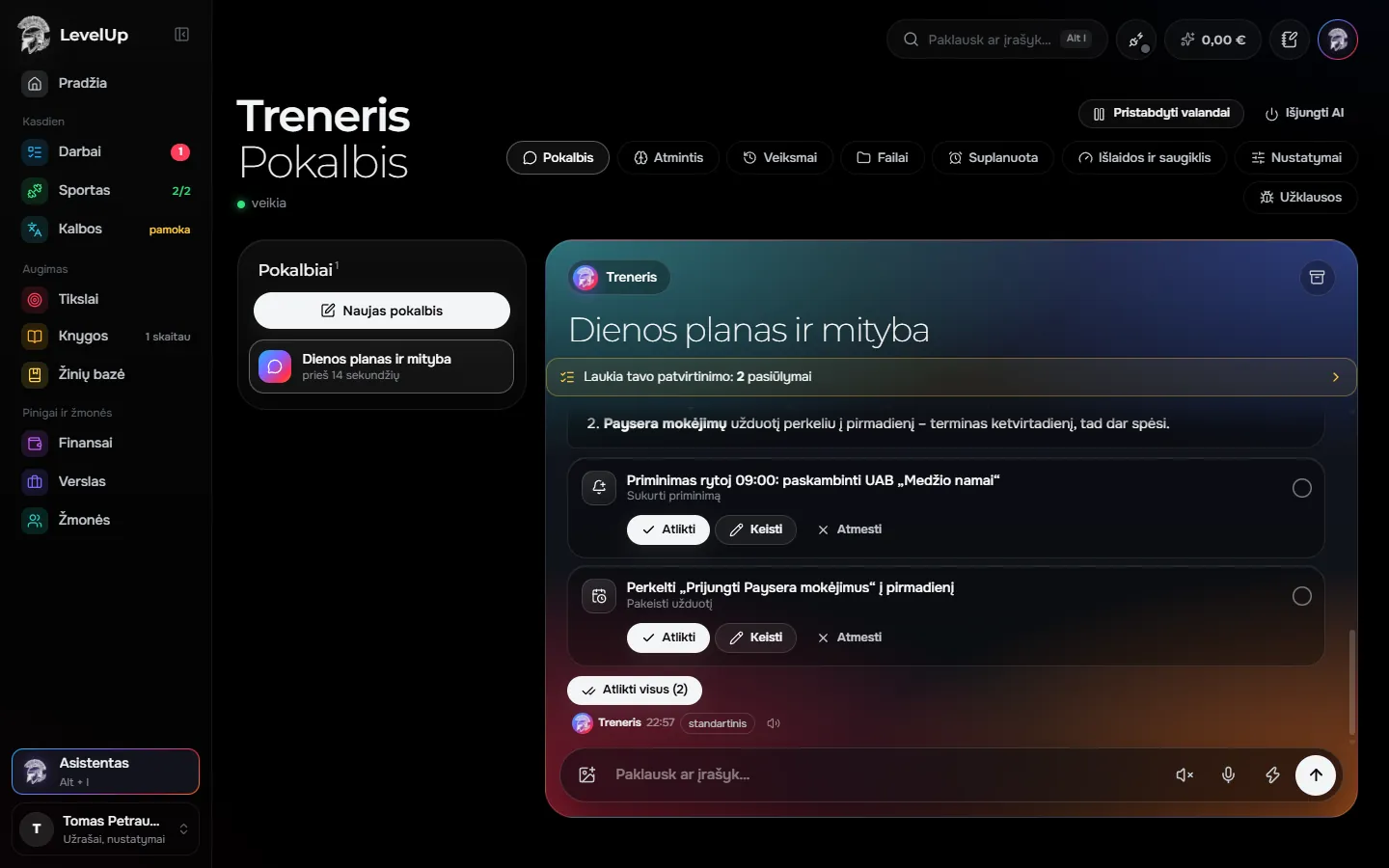
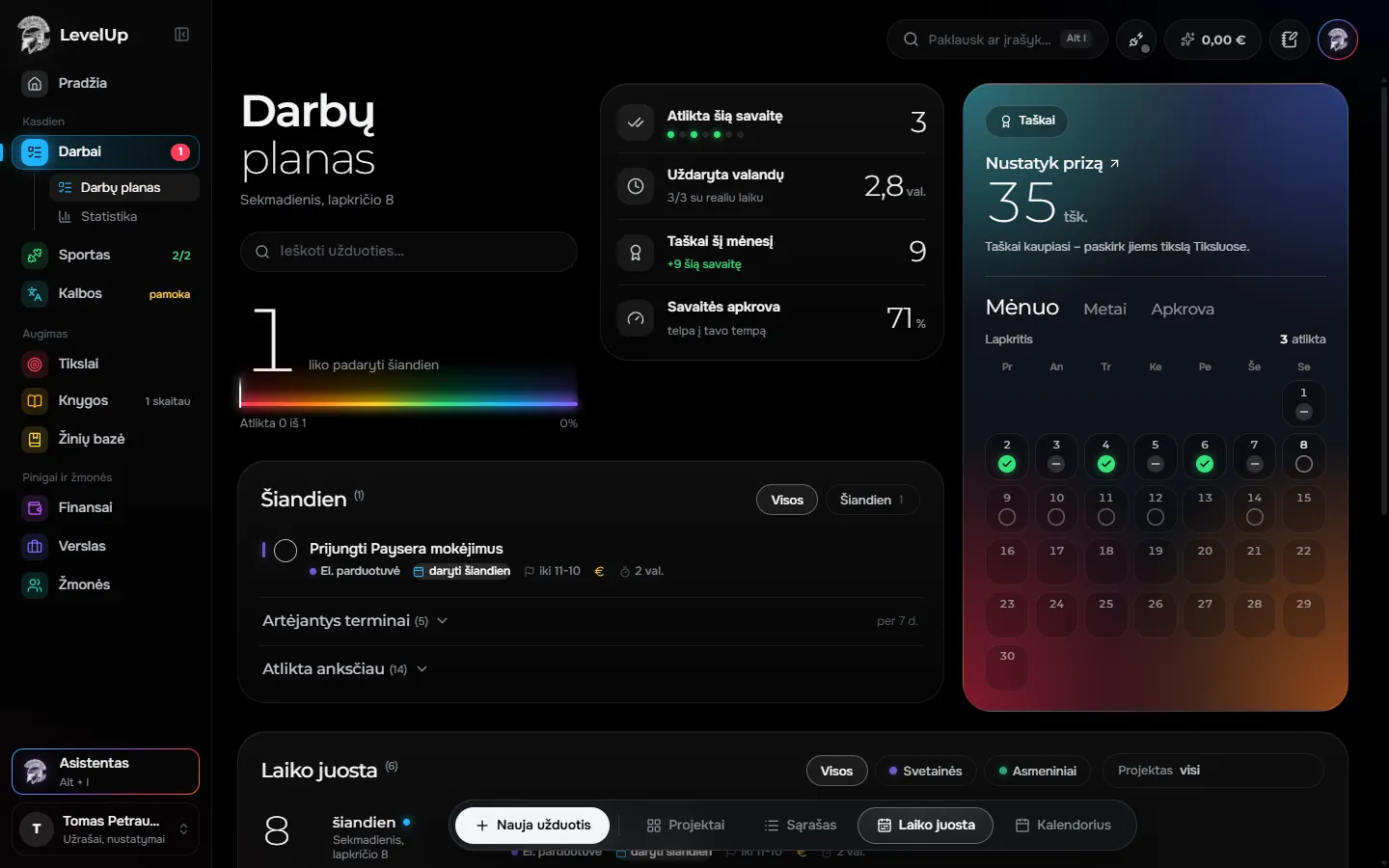
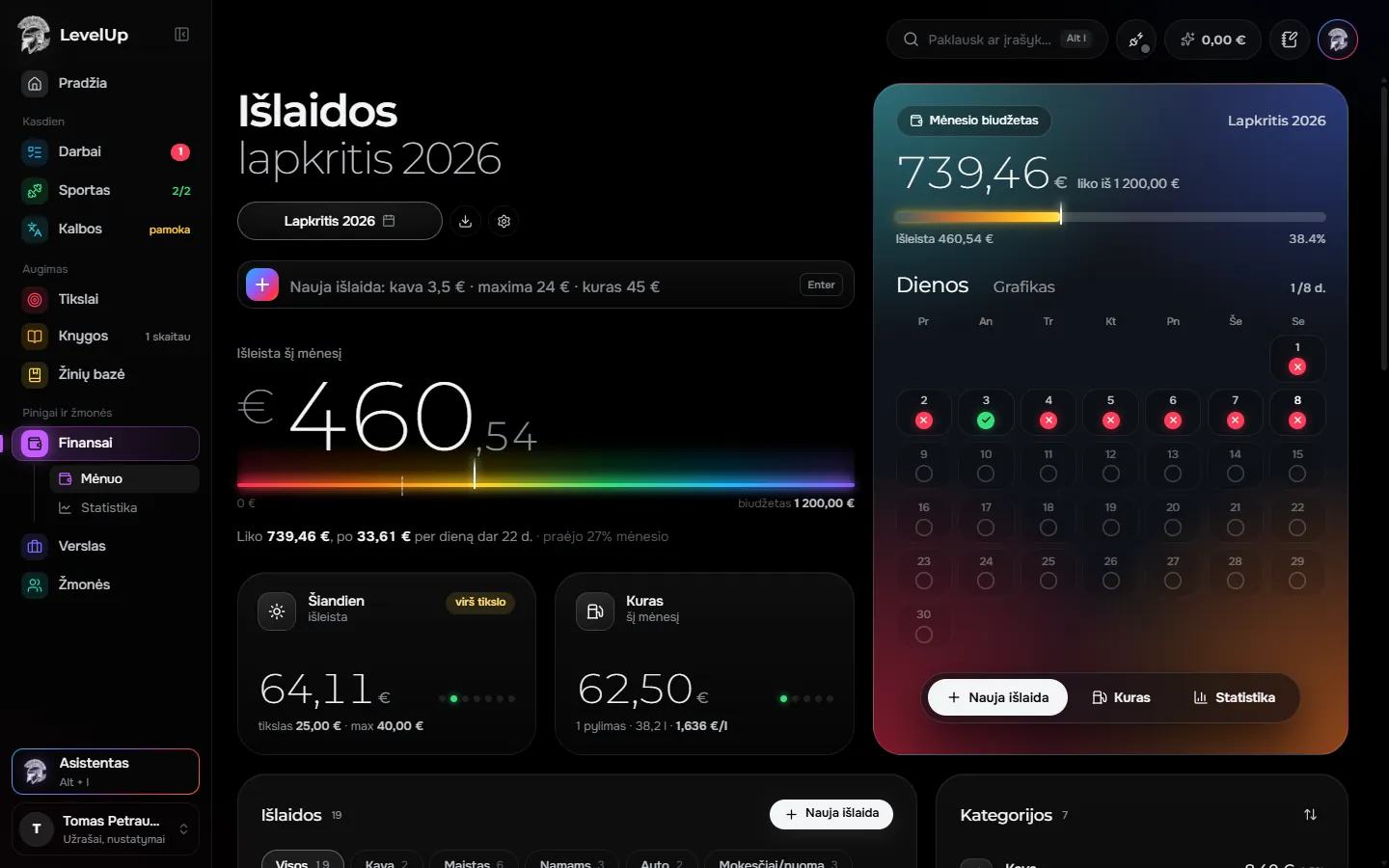
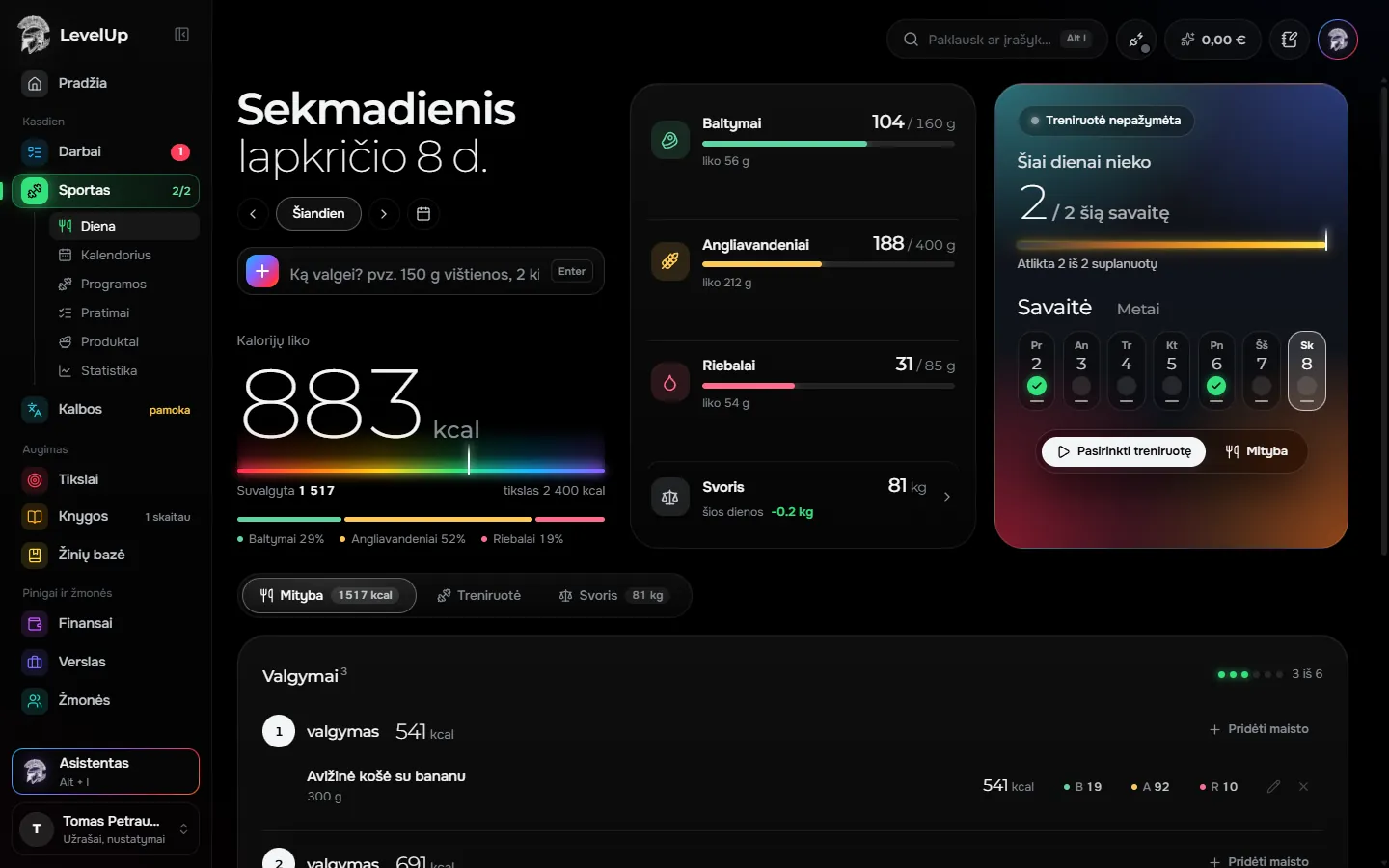
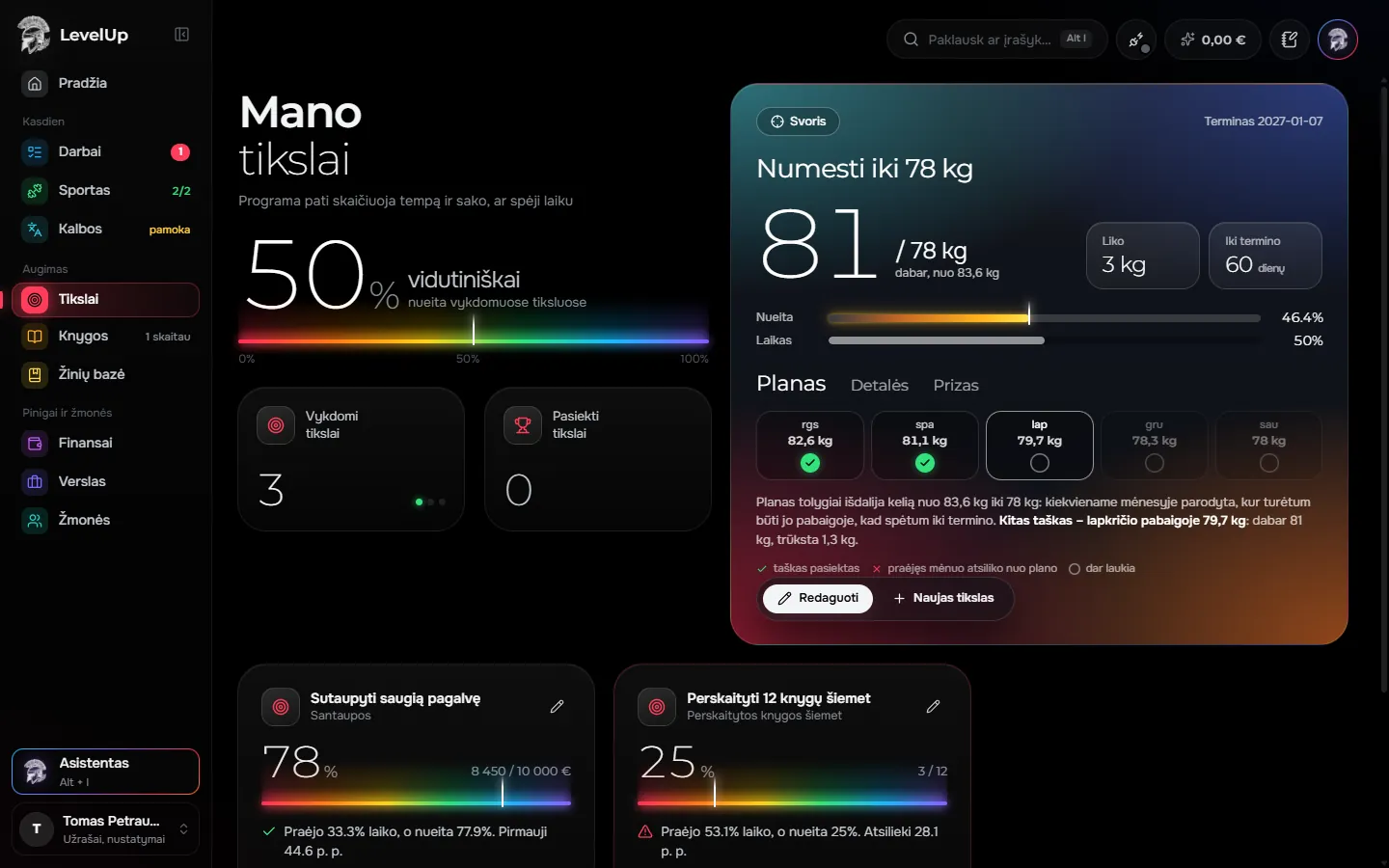
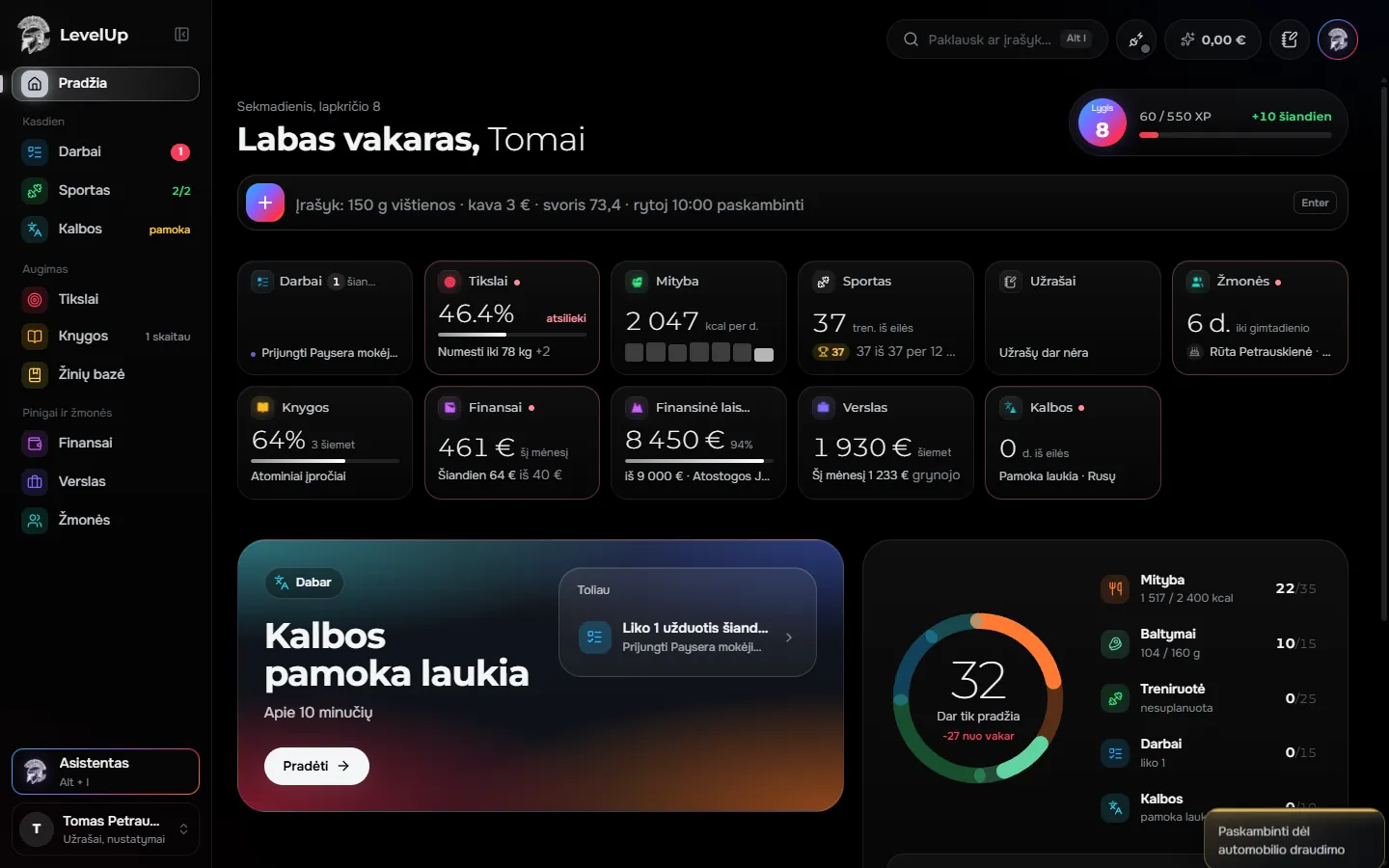
LevelUp brings everyday areas of life into one app: work and invoices, finances, training, nutrition, goals, books and people. Its centre is an AI assistant that is wired into all of that data. It answers questions with real numbers and turns a sentence like "remind me to call the client tomorrow at 9 and move the payment task to Monday" into concrete changes.
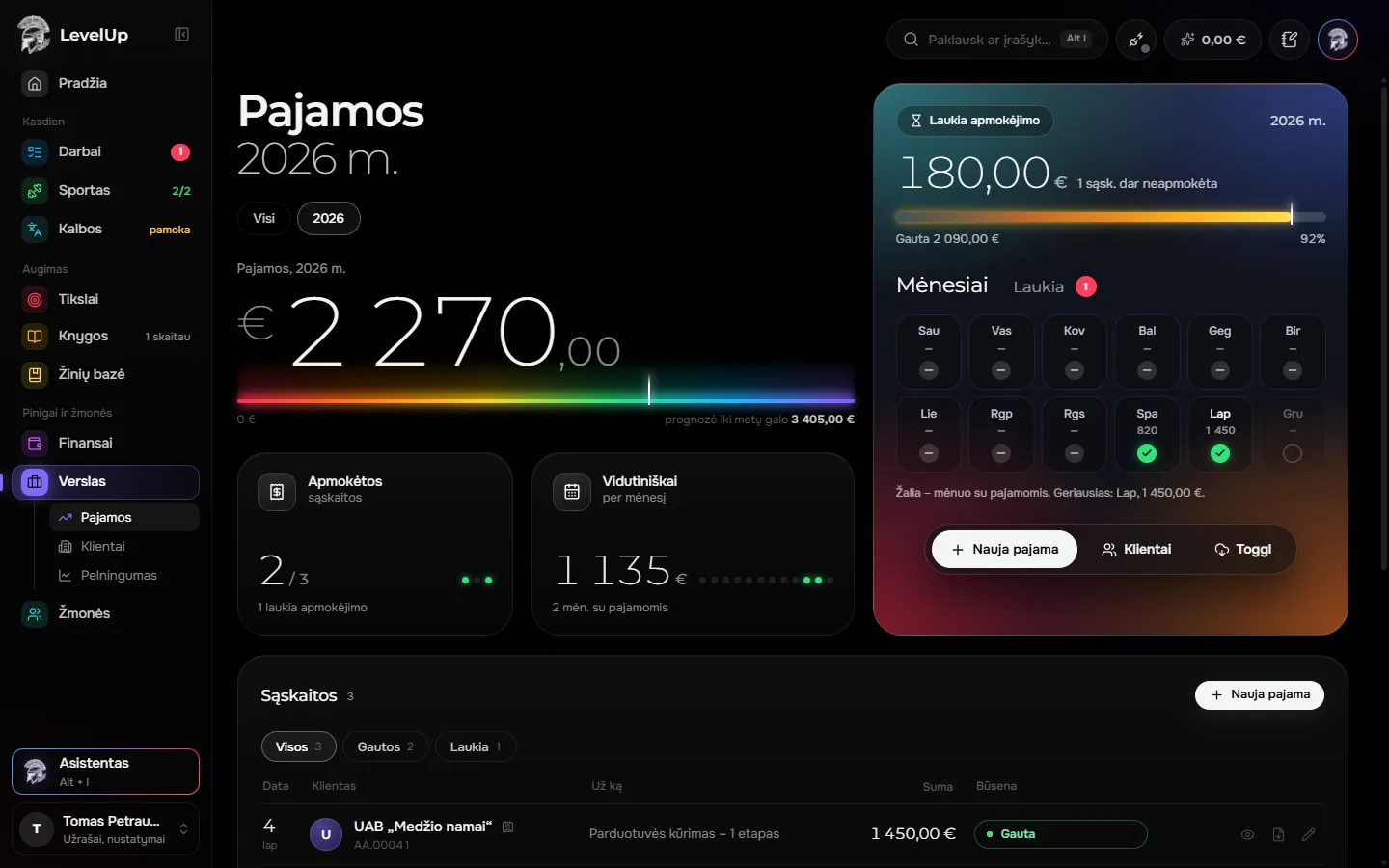
Screenshots show demo data.
How the AI assistant works
- Several AI providers, one interface. The assistant runs on Anthropic Claude, OpenAI or Google Gemini. Each provider has an economy, standard and power tier, and a router picks the tier for each request, so simple questions stay cheap and hard ones get a stronger model.
- It reads the data before it answers. Instead of guessing, the model asks for the data it needs: meals, workouts, tasks, expenses, invoices, goals, notes, or one search across everything. Web search is added for providers that cannot search on their own.
- Actions only with approval. The model never writes to the database itself. It proposes actions (add a task, log an expense, set a reminder, move a workout and 13 more), the user approves, edits or dismisses each one, and every action can be undone. Safe action types can be set to run automatically.
- Spend under control. Every model call is priced and logged. Budgets and a pause switch limit spending, and an automatic breaker stops background work when costs spike or calls keep failing.
- Memory and initiative. Long-term memory keeps facts the user wants remembered, and scheduled check-ins let the assistant speak first, for example about a goal that is falling behind, with a push notification on the phone.
- Files and voice. The assistant creates PDF, CSV, Markdown and calendar files on request, takes spoken questions in the browser and can read its answers aloud in Lithuanian.
- Debug view. Every model call, with its prompt, answer, model and cost, is visible on a separate screen, which makes the assistant's behaviour easy to check and improve.
The rest of the app
- A PWA that installs on the phone and the desktop, with daily and one-off reminders as push notifications.
- Passkey sign-in (WebAuthn) on the app lock, so no password is needed on a trusted device.
- Quick entry in plain words: "150 g chicken, coffee 3 €, weight 73.4" goes into the right modules at once.
- Business module with clients, invoices, income by month and Toggl time tracking.
What it shows
LevelUp is where we test AI integration on real daily use rather than in a demo: grounding answers in a company's own data, letting a model act without letting it act alone, and keeping the monthly bill predictable. The same building blocks go into client projects, from an assistant inside a business system to AI product descriptions for an online store.